
The fruit
What is lulo?
A small orange fruit from the Andes with green insides, a coat of hairs and a taste somewhere between pineapple and lime. It is the bite in Biting Lulo.
- Also called
- Naranjilla, “little orange”, in Ecuador. Lulo in Colombia.
- Family
- Nightshade (Solanaceae).
- Home
- Northwestern South America. In Colombia it grows at 1,600 to 2,400 m.
- Size
- Round, up to about 6 cm across.
- Inside
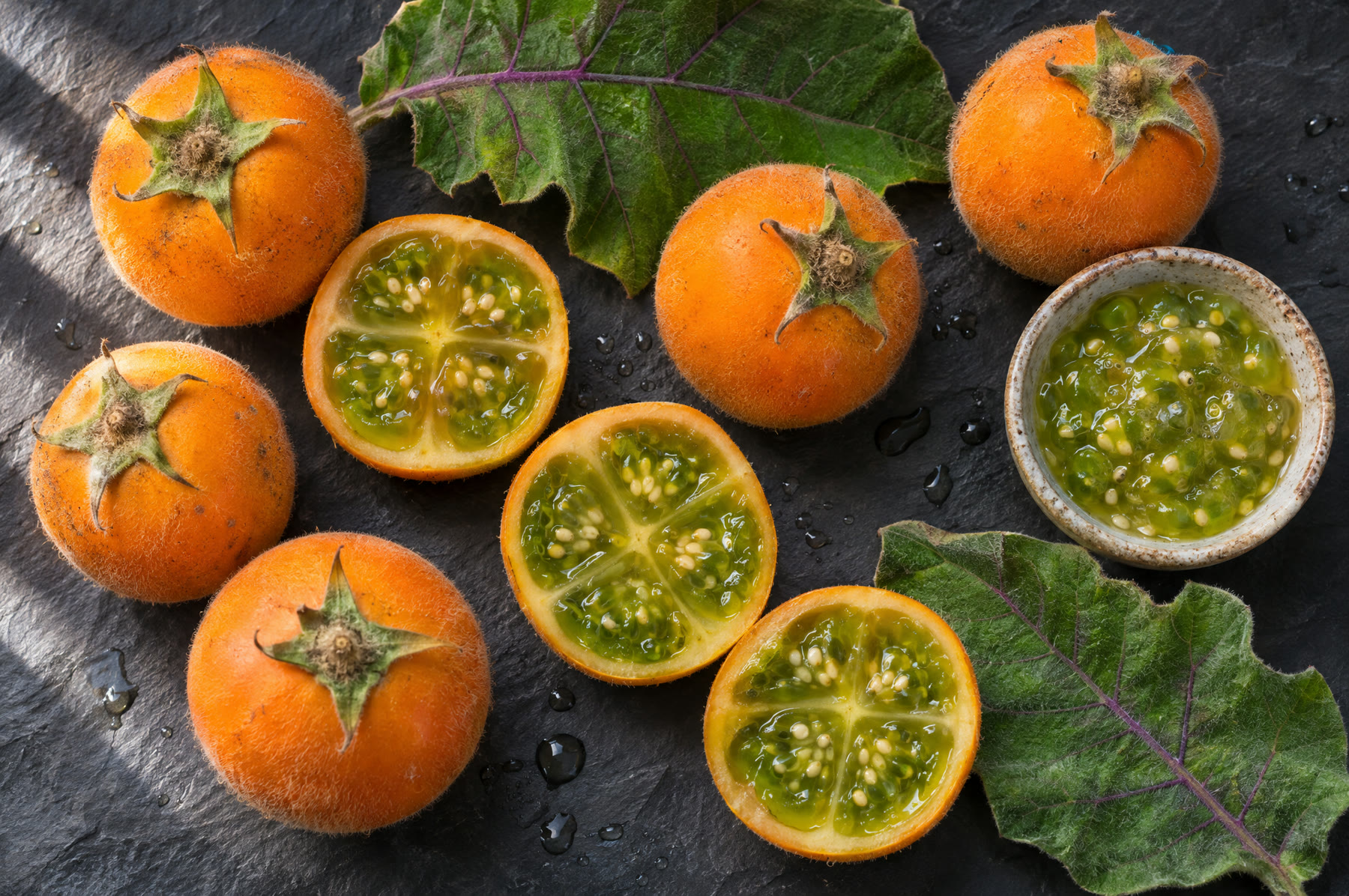
- Translucent green pulp in four compartments.
- Taste
- Citrus. Usually compared to pineapple with lemon or lime.
What it looks like
Orange outside. Green inside.
A ripe lulo is bright orange with a smooth, leathery peel. Cut it open and the pulp is translucent green and very juicy, split into four compartments full of small pale seeds. Even the juice comes out green.
Why nobody touches it
It comes with a warning
Until it ripens, the fruit wears a brown, hairy coat, which pickers rub off in dry grass. Wild plants carry spines on their stems and leaves, and young growth is covered in purple hairs.
Why you have probably never tried one
It doesn’t travel
Ripe lulo is easily damaged, so it is usually picked before it is ready, and a fully ripe one softens and ferments very quickly.
It doesn’t settle elsewhere either. Early plantings in California and Florida flourished only briefly, and as a greenhouse plant further north it will not fruit.
How Colombia drinks it
Mostly as juice
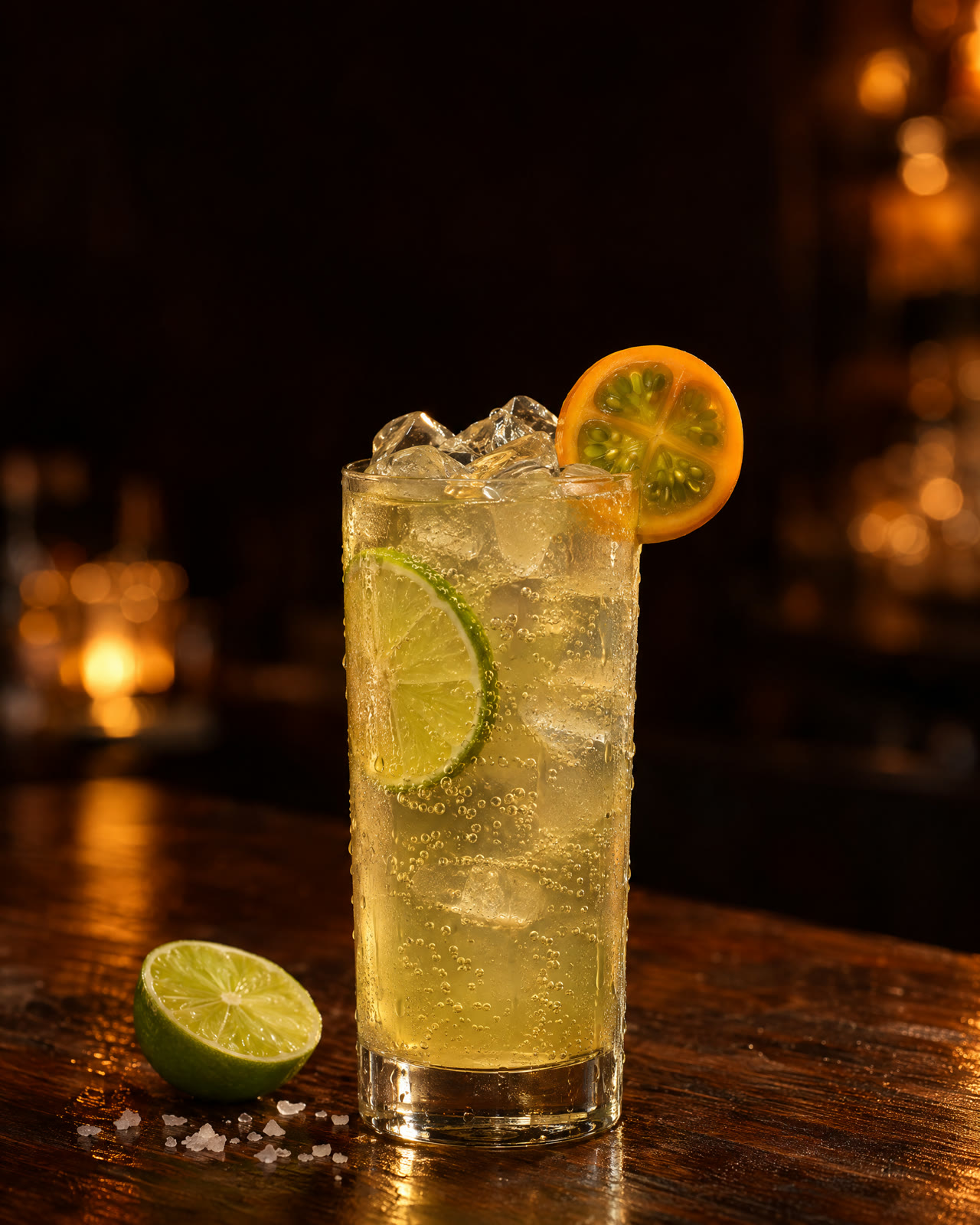
Blended, strained, sweetened and served with ice. In Cali they make lulada: the fruit is chopped by hand, never blended, and mixed with lime juice, water and sugar. Sometimes it gets a shot of aguardiente.
How we drink it
Biting Lulo
Cloud-forest citrus with a temper. Crisp acidity strikes first, refreshes second.
A sparkling soda made with 8% lulo juice, so you can meet the fruit without a trip to the Andes or a pair of gloves.
Incl. VAT, plus delivery. 1 box = 12 bottles of 20 cl. Delivery within 4 weeks.
Sources: Julia F. Morton, Fruits of Warm Climates, “Naranjilla” (1987); Wikipedia, Solanum quitoense and Lulada.